This is default featured post 1 title

Go to Blogger edit html and find these sentences.Now replace these sentences with your own descriptions.

This is default featured post 2 title

Go to Blogger edit html and find these sentences.Now replace these sentences with your own descriptions.

This is default featured post 3 title

Go to Blogger edit html and find these sentences.Now replace these sentences with your own descriptions.

This is default featured post 4 title

Go to Blogger edit html and find these sentences.Now replace these sentences with your own descriptions.

This is default featured post 5 title

Go to Blogger edit html and find these sentences.Now replace these sentences with your own descriptions.

Saturday, 18 June 2011

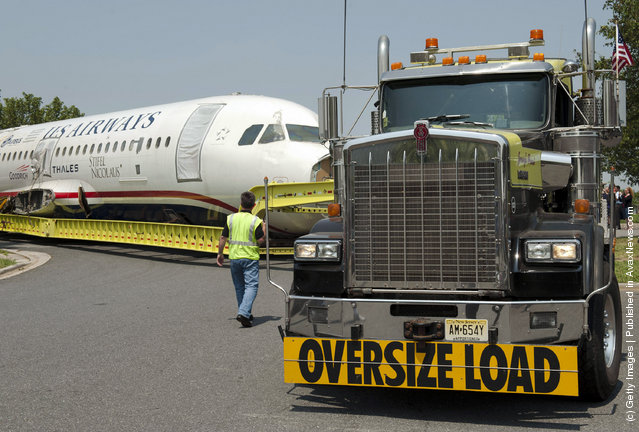
Miracle On The Hudson» Plane Arrives In Charlotte

“US Airways Flight 1549 was US Airways' scheduled domestic commercial passenger flight from LaGuardia Airport in New York City to Charlotte/Douglas International Airport, Charlotte, North Carolina. On January 15, 2009, the aircraft flying this route, an Airbus A320-214, was successfully ditched in the Hudson River adjacent to midtown Manhattan six minutes after takeoff from LaGuardia Airport after being disabled by striking a flock of Canada Geese during its initial climb out. The incident became known as the «Miracle On The Hudson».

The bird strike, which occurred just northeast of the George Washington Bridge about three minutes into the flight, resulted in an immediate and complete loss of thrust from both engines. When the aircrew of the Airbus 320 determined that they would be unable to reliably reach any airfield, they turned southbound and glided over the Hudson, finally ditching the airliner near the USS Intrepid museum about three minutes after losing power. All 155 occupants safely evacuated the airliner, which was still virtually intact though partially submerged and slowly sinking, and were quickly rescued by nearby watercraft.

The entire crew of Flight 1549 was later awarded the Master's Medal of the Guild of Air Pilots and Air Navigators. The award citation read, «This emergency ditching and evacuation, with the loss of no lives, is a heroic and unique aviation achievement». It has been described as «the most successful ditching in aviation history»”. – Wikipedia

Photos: The Airbus jet that pilot Chesley “Sully” Sullenberger landed on the Hudson River is pulled along Yorkmont Road as it makes its way to the Carolinas Aviation Museum June 10, 2011 in Charlotte, North Carolina. An official unveiling of the plane, which will be on display at the Carolinas Avaiation Museum, will take place on Saturday, June 11. (Photo by Davis Turner/Getty Images)





999 Nudes Participate In London Publicity Stunt

Hundreds of willing participants remove their clothes for a publicity stunt near Waterloo, on March 15, 2009 in London, England. The airline Aer Lingus advertised on the website 999nudes.com for members of the public to take part. (Photo by Jim Dyson/Getty Images)


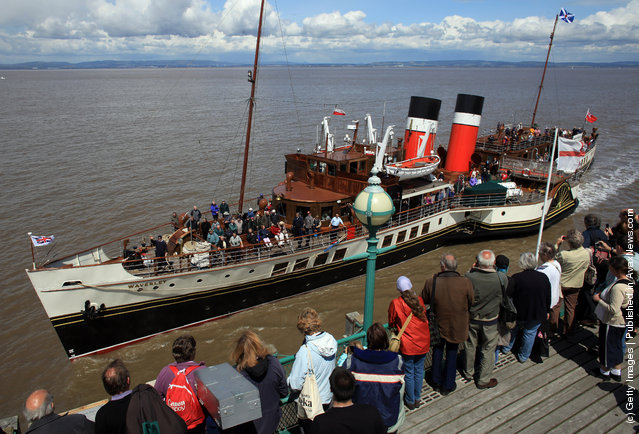
The Waverley The World's Last Seagoing Paddle Steamer Under Threat

Passengers watch as The Waverley, the world's last remaining seagoing passenger paddle steamer arrives at Clevedon Pier on June 10, 2011 in Clevedon, England. Built in 1946, the trust which owns and operates the Waverley, is warning that this could be the last season for the vessel and is appealling for more public funding saying it is struggling to make ends meet in the current financial climate due in part to rising fuel costs. Restored in 1973 after service on Loch Long in Scotland, since 2003, Waverley has been listed in the British National Register of Historic Ships core collection as 'a vessel of pre-eminent national importance'. (Photo by Matt Cardy/Getty Images)


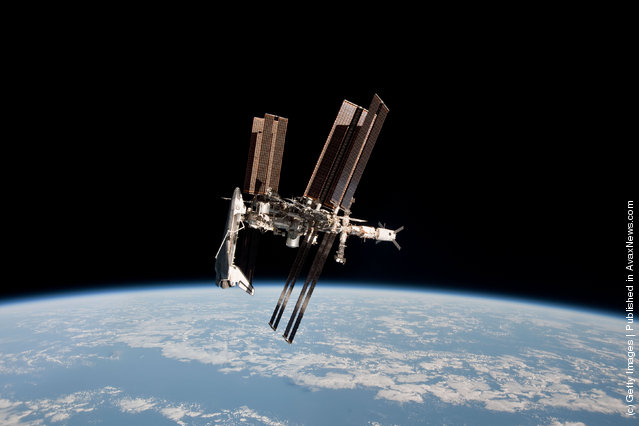
Endeavour Orbits Earth Docked To International Space Station

In this handout images provided by the European Space Agency (ESA) and NASA, the International Space Station and the docked space shuttle Endeavour orbit Earth during Endeavour's final sortie on May 23, 2011 in Space. Italian astronaut Paolo Nespoli captured the first-ever images of an orbiter docked to the International Space Station from the viewpoint of a departing vessel as he returned to Earth in a Soyuz capsule. (Photo by Paolo Nespoli - ESA/NASA via Getty Images)


Sunday, 12 June 2011

Shareholders feel boardroom failings where it hurts most

Big investment houses are accused of not engaging enough with companies on governance issues, although the reality is that many more conversations take place behind the scenes than get reported.


Investors certainly care about how the businesses they invest in are run, and a glance at the chart will tell you why. When there are serious failings in the boardroom, such as those demonstrated this week at Kazakh miner ENRC, shareholders eventually feel it where it hurts most.

ENRC has underperformed the rest of the UK mining sector by a significant margin over the past year despite more than doubling its profits in 2010 on the back of the global commodities boom. The chart shows why corporate governance cannot be an add-on for a fund manager. It is a fundamental part of the process which, in this case, has unsurprisingly led to many investors giving the company a wide berth.

Most examples of poor corporate governance are less glaring than the unedifying spectacle of last Wednesday's defenestration of two of ENRC's non-executive directors. Sir Richard Sykes and Ken Olisa were shown the door, it would seem, for having the temerity to do their job – holding the executives to account. It was the first time in 10 years that a director of a FTSE 100 company has been voted off the board at an annual meeting.

At the heart of this debacle is the dominance of a trio of founding shareholders who pledged a hands-off approach when the company floated in London in 2007 but have since ignored that promise. Together with fellow FTSE 100 miner Kazakhmys and the Kazakh government, the three have a stranglehold on the company's shares, fewer than 20pc of which are freely available to outside shareholders.

This would ordinarily have precluded a float in London, and a special exemption had to be granted to allow it to go ahead on the grounds the company was big enough for the few shares in the free float to represent a liquid market. The events of the past few days have cast doubt on the wisdom of that decision.


10 of the best smart phone apps that will save you money


You can now get cashback on your mobile with the latest app


Keeping up with the Joneses means making the most of your smart phone. And with the right applications – or apps – you'll never have to pay full price for a meal out or a good book again.

We have picked 10 apps to help you save money.


UK economy 'Plan A' - Is George Osborne on the right path?

In his first Mansion House speech last June, the Chancellor made much of the fact that the economic fall-out from the banking crisis increased the risk that investors will lose faith in a state's ability to fund itself.


Osborne has used this as a platform to justify his austerity plans, arguing that though the UK has a higher deficit – the annual shortfall in the budget between revenue and expenditure – than crisis-hit Greece, it pays similar interest rates on its national debt as Germany, a bastion of fiscal rectitude.

Economists are split over whether the UK was in real danger. The financial crisis certainly blew an £84bn-a-year hole in the UK's public finances as tax revenues suffered, according to the Institute for Fiscal Studies (IFS). But unlike our debt-laden European neighbours using the euro, who have seen their borrowing costs soar, the UK sets its own monetary policy to suit the country's individual needs. Also, much of the UK Government debt consists of long-term bonds, which avoids the need to constantly return to the markets to raise more funds.

"There was never a real risk of a sovereign debt crisis in the UK. At the time of the May 2010 election the similarity with the Greek economy was significantly overblown," says Simon Kirby at the National Institute of Economic and Social Research (NIESR).

Kevin Daly and Adrian Paul at Goldman Sachs are convinced that a debt crisis was a risk, although the UK's borrowing costs show investors never lost confidence in Britain's ability to fund its borrowing. "Bond yields can suggest everything is fine, until it is not," they say.

It is unknowable what would have happened if the Coalition had reacted differently. But the yield on the UK's 10-year bond is now slightly lower than it was a year ago, at around 3.3pc against 3.6pc. That reveals that investors in sovereign debt feel more confident about the UK than they did a year ago.


Get no-obligation advice from NatWest

Whatever your plans are, NatWest could help you make the most of them with Financial Planning.

There are certain stages in life, such having a young family or retirement, where financial planning is important.

We understand that there can be lots to think about but we can help making the most of your finances as simple and straightforward as possible, so you can focus on making the most of your life.

A qualified financial adviser is usually the best person to help you make plans for your money. That’s why we have so many Financial Planning Managers working for NatWest, all dedicated to helping our customers to make the most of their money.

And because we believe in Helpful Banking, it won’t cost you a penny to find out how best to look after your pounds – our Financial Planning appointments are free.

The first meeting takes around 45 minutes. You’ll talk about your life now, plans for the future, and which dreams you’d like us to help turn into reality. Everything matters. From long-term savings options for your dream home to pension arrangements that can help you make the most of retirement. Whatever your plans are, we could help.

Starting out

Getting married? It’s the start of your lives together. So will you keep your finances separate or explore the benefits of pooling your money?

Our Financial Planning Managers can advise you, either together or in individual meetings – and will make sure that your personal finances are always kept confidential. You can discuss any aspect of long-term personal finance, from investments and protection to retirement plans for your life together.

Moving on

For young families, it can be hard to think about planning for the future when there’s so much to pay for right now. Our Financial Planning Managers understand that finances can be stretched, so they’re keen to help find easy ways for you to save money for the long term. They could help you make sure savings are tax-efficient and get the right type of protection in place, should your circumstances change.

Building up

Investing already, but concerned about the economy? It’s important to be sure that your money is working hard to achieve your goals. With our Financial Planning Managers’ help, you can review your funds’ performance, your circumstances and attitude to risk on a regular basis. We’ll help you explore investment opportunities that continue to support your long term aims, and we may be able to help you save money by reviewing your plans, too.

Slowing down

Have you thought about your finances when you retire? Our Financial Planning Managers can review your current plans to make sure that you’re making the most of your long term savings for retirement. Robust plans are important, and it’s never too early to start planning for a happy retirement.


Sandi Toksvig: Rebuilding the grey matter

If you see me sitting still it's not a replica of my corpse, I'm regenerating my brain, explains Sandi Toksvig


I’ve been thinking of regenerating my brain. I don’t suppose it will take long. I was awakened to the thought by a piece of driftwood and the Thames River Police. Occasionally, as I sit at my desk, the police boat roars past and its wake causes my houseboat to shake as if it feels suspected of whatever crime is afoot or afloat. I don’t suppose there is as much water-related crime as there used to be.

When the force was first founded in 1798 there were some 33,000 workers plying a river trade of which the authorities estimated that about 11,000 of them were “on the game”. I can only imagine it was a slow game as this, the first police force in the country of any kind, managed to catch criminals by simply rowing about.

As they bombed past this week a piece of driftwood banged into my boat and made me think about crime and the philosopher Jeremy Bentham, who died this week in 1832. Jeremy assisted with the founding of the London riverine constabulary at a time when having police at all was considered to be something reserved for feckless foreigners. It was fine for France or even Greece, countries the British rather presumed to be awash with people who required apprehending, but it was not required at home.

Bentham is an interesting man who rather confirms the notion that predicting the future is a parlous business. Back in 1776 when the Americans were revolting, he wrote a paper in which he declared “the age we live in is a busy age; in which knowledge is rapidly advancing towards perfection”.

With the smugness of hindsight we now know how ignorant we are. Scientists have had to build what is in effect the world’s largest underground salad spinner in Switzerland, the Hadron Collider, in order even to try and understand the basics.

Certainly we have little idea how the brain works. It was today in 2003 that an Arkansas man called Terry Wallis spoke for the first time in nearly 19 years. Wallis was not intentionally hermit like. He had been in a car accident in 1984 which left him in what seemed a persistent vegetative state with virtually no chance of recovery. Many years of coma later, he unexpectedly said “Mom” and has carried on talking ever since. Scientists believe that Terry’s brain may have actually regenerated itself; that it has very gradually “developed new pathways and completely novel anatomical structures to re-establish functional connections, compensating for the brain pathways lost in the accident”.

The great thinker Bentham himself cannot have known that thinking itself can be re-established once damaged. Instead he came close to positing that we could pretty much close the chapter on science, thus leaving us time to sit about and contemplate morals. Sadly, history shows us that having the time doesn’t necessarily mean one’s thoughts will be moral.

Back in 1099 there was a hermit living on the Mount of Olives. I don’t know what his name was. Let’s call him Frank. I would have thought “hermit basics” involved a dedication to silence but Frank couldn’t keep his mouth shut. It was today in 1099 that the leaders of the First Crusade are said to have visited him to seek advice. If Frank had to speak at all, the sentence “I’ve been living alone with all these olives for years, try my salad” would have been fine but instead he urged the crusaders to assault Jerusalem.

This they did enthusiastically, massacring and pillaging on a such a grand scale that the ripples still echo today. If Frank had spent less time contemplating criminal activity and a bit more perfecting, say, a tapenade recipe, the world would’ve been a better place.

What turns some minds criminal is a subject for debate and may help make the criminal intriguing. It was today in 1962 that the world woke up to the news that three convicts had used spoons to dig their way out of the infamous prison Alcatraz in San Francisco Bay. Bank robber brothers Clarence and John Anglin and armed robber Frank Morris managed to tunnel their way out, before departing the rock island on a raft made of driftwood and raincoats. No one knows if the three criminals made it to the mainland. It is most likely that the ne’er-do-wells drowned but, in a pleasing tribute to police patience, the FBI are apparently still looking for them.

Bentham is easier to track down. A seated replica of his corpse is preserved in a glass display case at University College, London. It is said that there was an occasion when Bentham was replaced by a simple card which read: “Gone on holiday”. In fact he was undergoing restoration work following a rumoured beetle invasion, and who among us has not at some time concealed the true reason for an absence?

It made me think that perhaps, although I lack beetles to blame, I too need a break. Perhaps I could make a raft of my driftwood and an old mac. How lovely to sit upon the Thames eating tapenade while thinking improving thoughts and waving at the police as they scoot past. If you should see me sitting silently upon the river, please don’t speak. I’m busy regenerating my brain.


Heavy clashes as Syrians raid Jisr al Shughour

Syrian state television reported heavy clashes between army troops and gunmen in the northern town of Jisr al-Shughour on Sunday, and said a large number of people had been arrested.


Heavy confrontations are raging between army units and members of armed organisations taking up positions in the surroundings of Jisr al-Shughour and inside it," it said.

"Two members of the armed organisations were killed, large numbers of them arrested, and lethal weapons in their possession were seized," it said, adding that army units had defused bombs and explosive charges planted by gunmen on the bridges and roads of the town.

Tanks and helicopters shelled and machinegunned a northern town on Sunday in a drive to crush an uprising against President Bashar al-Assad that has led thousands of refugees to flee to Turkey.

Forces commanded by Assad's brother Maher stormed Jisr al-Shughour from the south, residents said, copying tactics used in other cities and towns to suppress street protests demanding political freedom and an end to Assad's autocratic rule.

"They are using up to 150 tanks and armoured vehicles. Jisr al-Shughour is small and there is not even space to park all this armour. The shelling is nonstop now. Two helicopters are flying overhead and firing their machineguns," one resident said.


Thursday, 9 June 2011

Endeavour Orbits Earth Docked To International Space Station

In this handout images provided by the European Space Agency (ESA) and NASA, the International Space Station and the docked space shuttle Endeavour orbit Earth during Endeavour's final sortie on May 23, 2011 in Space. Italian astronaut Paolo Nespoli captured the first-ever images of an orbiter docked to the International Space Station from the viewpoint of a departing vessel as he returned to Earth in a Soyuz capsule. (Photo by Paolo Nespoli - ESA/NASA via Getty Images)


Tuesday, 7 June 2011

Live television, new 'Halo' coming to Xbox 360


Don Mattrick, president of Interactive Entertainment Business for Microsoft, speaks at the Microsoft Xbox global media briefing during the E3 gaming convention in Los Angeles, Monday, June 6, 2011. (AP / Matt Sayles)


LOS ANGELES — Live television and another chapter of the "Halo" game are landing on Xbox 360.

Microsoft Corp. announced its plan for the video game console on Monday at a news conference kicking off the Electronic Entertainment Expo, the industry's annual convention.

The company said live TV would be offered by domestic and international broadcasters, but no other details were revealed.

Partnerships with international broadcasters currently bring live TV to Xbox 360 in the United Kingdom, Australia and France, but the service unveiled Monday would be the first such offering available on a gaming console in the United States.

Xbox 360 and Sony Corp.'s PlayStation 3 already provide the ability to stream and download movies and shows.

Meanwhile, Microsoft hinted that "Halo 4" would be the "dawn of a new trilogy" for the blockbuster, intergalactic shoot-'em-up series. The previous game, "Halo: Reach," earned $200 million on its first day and sold 3.3 million copies in its first month on the market last year, according to Microsoft and industry tracker NPD Group.

The company also announced at the University of Southern California's Galen Center that increased functionality with its Kinect camera system was coming to Xbox 360, including the abilities to fully navigate menus with voice commands, scour for online and hard drive content with Microsoft's Bing search engine, and play games such as "Mass Effect 3" in tandem in the traditional controller.

The feature was demonstrated with the sci-fi role-playing sequel to "Mass Effect 2," as Kinect recognized vocal commands while a player used an analog controller to navigate the virtual landscape and fire a blaster.

Other gaming franchises that will add Kinect functionality include shooter "Tom Clancy's Ghost Recon Future Soldier" and racer "Forza Motorsport 4."

"Kinect has been wildly successfully, and we want to provide experiences with it for that broad audience but also the core crowd that made Xbox what it is," said Mike Delman, marketing vice president of Microsoft's interactive entertainment division. "For example, in `Forza,' you'll be able to tilt your head to see different angles from the driver's seat."

Other games that utilize Kinect included the virtual theme park explorer "Disneyland Adventures," hands-sweeping magical adventure "Fable: The Journey," gladiatorial sparring game "Ryse," a second season follow-up to "Kinect Sports," and a "Star Wars" game that turns players' movements into the powers of The Force.


New FT app bypasses iTunes to deal directly with readers


The FT's new iPad app is available via browsers rather than iTunes

The Financial Times has introduced a new browser-based app for tablets, claiming it as "a major first by a news publisher."

The automatically updating app will enable readers to access its editorial content across a broad range of tablet and smartphone devices.

According to an article in today's FT, the app will bypass Apple's iTunes store and Google's android market.

It will therefore overcome the problem posed by Apple's reluctance to share detailed data on the identities and behaviour of users. Publishers have railed against that barrier.

Initially optimised for the iPad and iPhone, the app will be adapted for other tablets, including android-based devices.

John Ridding, the FT's chief executive, said the company was talking to Apple about data-sharing concerns, but he added: "This is not about Apple. It's about our readers and making sure they have a consistent experience."

He went on: "This is an important step in our strategy of providing multi-channel access to our global journalism quickly and simply.

"The FT web app offers our customers flexibility and freedom of choice... with a single login or subscription. In a world of increasingly digital complexity we want to keep our service simple, easy to use and efficient."

Rob Grimshaw, managing director of FT.com, said the FT had no plans to pull out of any apps store, but that it would encourage users to adopt the web app.

For example, as part of the launch, the new FT web app offers free access to content throughout this week.

Can Apple's iCloud rival Google and Amazon?


With the iCloud the data is stored in Apple's servers and can also be accessed wirelessly by phones, computers and tablets

So Apple has at last got into the cloud, with Steve Jobs unveiling the iCloud service at the company's Worldwide Developers Conference.

What will the iCloud mean for users - and does it really pose a threat to rival services from the likes of Google, Amazon and Spotify? I've been taking a look.

So Apple has at last got into the cloud, with Steve Jobs unveiling the iCloud service at the company's Worldwide Developers Conference.

What will the iCloud mean for users - and does it really pose a threat to rival services from the likes of Google, Amazon and Spotify? I've been taking a look.


CAMBODIA-THAILAND: Border dispute hits de-mining efforts


Cambodia is littered with landmines (Photo: Sean Sutton/MAG)
BANGKOK, 7 June 2011 (IRIN) - Cambodia's ongoing border dispute with Thailand is undermining mine-clearance activities inside the country, specialists say.

"The lack of clearance along parts of the border stops the removal of mines, leading to more casualties," Cameron Imber, programme manager for the British demining NGO Halo Trust, told IRIN from the northwestern town of Siem Reap.

The heavily mined border area in the country's northwest includes a 1,065km long minefield known as "K5", which runs along the 798km Thai-Cambodian border. Laid by the north Vietnamese in the mid-1980s, K5 runs all the way from Koh Kong Province in the southwest up to Preah Vihear in the northwest.

Packed with up to 2,400 mines per linear km, K5 remains excluded from mine-removal programmes because the two countries have been at loggerheads over ownership of an ancient Hindu temple and UN World Heritage site on the Cambodian side of the border. Thousands were displaced on both sides earlier this year.


"The suspension of operations on K5 stems from the beginning of hostilities over the Preah Vihear temple dating back to the summer of 2009," Imber said.

Heavy contamination

Since 2007, almost 6,500 landmine casualties have been reported nationwide, 90 percent of which occurred in the border areas. Nearly half, 2,925 casualties, were in the untouched K5 minefield, according to the Landmine Cluster Munition Monitor, an initiative providing research for the International Campaign to Ban Landmines (ICBL) and the Cluster Munition Coalition.

"K5 is the most densely mine-contaminated area in Cambodia, and one of the most [contaminated] in the world," said Yeshua Moser-Pangsuwan, research coordinator for ICBL, an advocacy network for the 1997 Mine Ban Treaty.

Mined areas within, and directly adjacent to, the disputed border areas are not being cleared because the two countries have been unable to agree where the border is located, Moser-Pangsuwan noted.

"Proposals for joint demining cannot commence until Thailand and Cambodia reach a mutual understanding of the border demarcation," he said.

Delay hinders farming

While in recent years landmine deaths have fallen from more than 1,000 in the early 1990s to 141 in 2010, the delay in mine clearance in the northwest, including K5, continues to hinder access to badly needed farmland.

"Land mine contamination is a huge obstacle for people's livelihoods and their ability to work themselves out of poverty," Jamie Franklin, the Cambodia coordinator for Mines Advisory Group, an international organization dedicated to mine clearance and post-conflict recovery, explained.

In recent years, there has been an increase in impoverished farmers encroaching on mine-infested land. "The people who expand farming to contaminated areas do it out of economic necessity," Imber said.

According to a report by the Cambodia Mine Action and Victim Assistance Authority earlier this year, nearly half - 45 percent - of all mine accidents occur during livelihood activities, with 62 percent of those affected men.

"People know the dangers but not having enough to eat will [outweigh] the risk of mines," Franklin said.

Share

Twitter Delicious Facebook Digg Stumbleupon Favorites